Indica vs Sativa in Medical Cannabis: What Actually Matters When a Doctor Picks Your Strain
Indica puts you to sleep, sativa lifts you up. That's how the recreational market sells it, and that's how most patients walk into a clinic thinking. In medical cannabis the split stopped being useful years ago - and a competent doctor doesn't prescribe off a botanical label.
Below: where the dualism came from, why we look at something else in the clinic, and what actually decides whether a strain works for your symptoms.
Where the split came from: short history
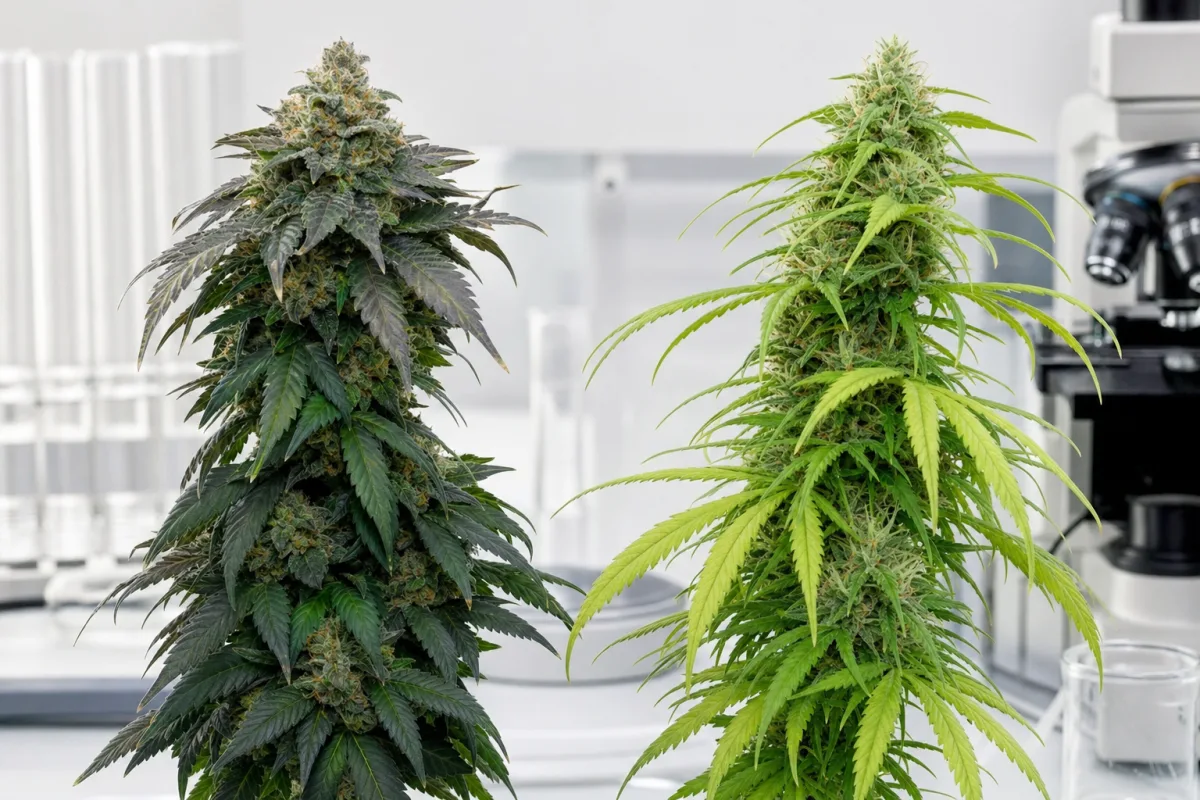
Botanist Jean-Baptiste Lamarck described *Cannabis indica* in 1785 - a shorter, bushier plant from India. Linnaeus had already catalogued *Cannabis sativa* from Europe. Two varieties, two origins, the split looked clean.
Growers in the 1970s and 80s baked it into the culture: indica = relaxation, sativa = energy. It worked great as Amsterdam-coffeeshop shorthand. Less great in medicine.
Why Indica vs Sativa isn't enough
After decades of crossbreeding, almost every strain on the market is a hybrid. Pure indica and pure sativa barely exist on a pharmacy shelf.
Recent research (Hazekamp 2016, McPartland 2017 among others) shows the therapeutic effect depends on three things:
The Indica/Sativa label isn't on that list. The producer will use it in the strain name, sure. The doctor looks deeper.
What actually decides: THC, CBD and terpenes
THC (tetrahydrocannabinol) is psychoactive, relieves pain, relaxes muscles, stimulates appetite. Above a certain dose it sedates - often confused with the 'indica effect'.
CBD (cannabidiol) reduces anxiety, fights inflammation and seizures. No intoxication. In THC blends it dampens the side effects.
Terpenes are volatile compounds responsible for aroma and modulating the experience:
The doctor reads the Certificate of Analysis (CoA) of a specific preparation - not the strain name. That's why two 'indicas' from different producers can act completely differently.
What this means for the patient
In practice the strain selection works like this:
A cannabis prescription should be written by a doctor who reads the CoA. Not one who says 'take an indica for sleep'.
How CannabisMedic handles it
At CannabisMedic strain selection starts with the interview, not the label. We ask about symptoms, timing, current medications, lifestyle (do you drive in the morning? physical job?).
From that the doctor picks a cannabinoid and terpene profile. Initial prescriptions usually go to preparations with a well-documented profile (Aurora, S-Lab) - we adjust from there.
If you want to find out which profile fits your symptoms - book a qualifying visit. 30 minutes is enough to walk out with a specific prescription.
Ready to start therapy?
Book online in 60 seconds - consultation at our clinic in Krakow, Bydgoszcz, Toruń or Kielce.
Book a consultation