Medical Cannabis for Chronic Pain - What the Research Says
Chronic pain is the most common reason patients seek treatment at a cannabis clinic. And for good reason: of all the indications for medical cannabis, pain - and neuropathic pain in particular - has the strongest body of evidence behind it. When standard medications fail or their side effects become intolerable, cannabinoids become a genuine option worth considering.
This is not a miracle treatment, and it will not work for everyone. But for some patients, it allows them to reduce opioid use, regain sleep and return to everyday functioning. Below, the specifics: what types of pain it addresses, how it works, what the research shows, and when it is actually worth trying.
What types of pain does medical cannabis address
The best results are seen with pain that has persisted for weeks or months and does not respond adequately to standard treatment. Cannabinoids are particularly effective when pain has a nerve or inflammatory component.
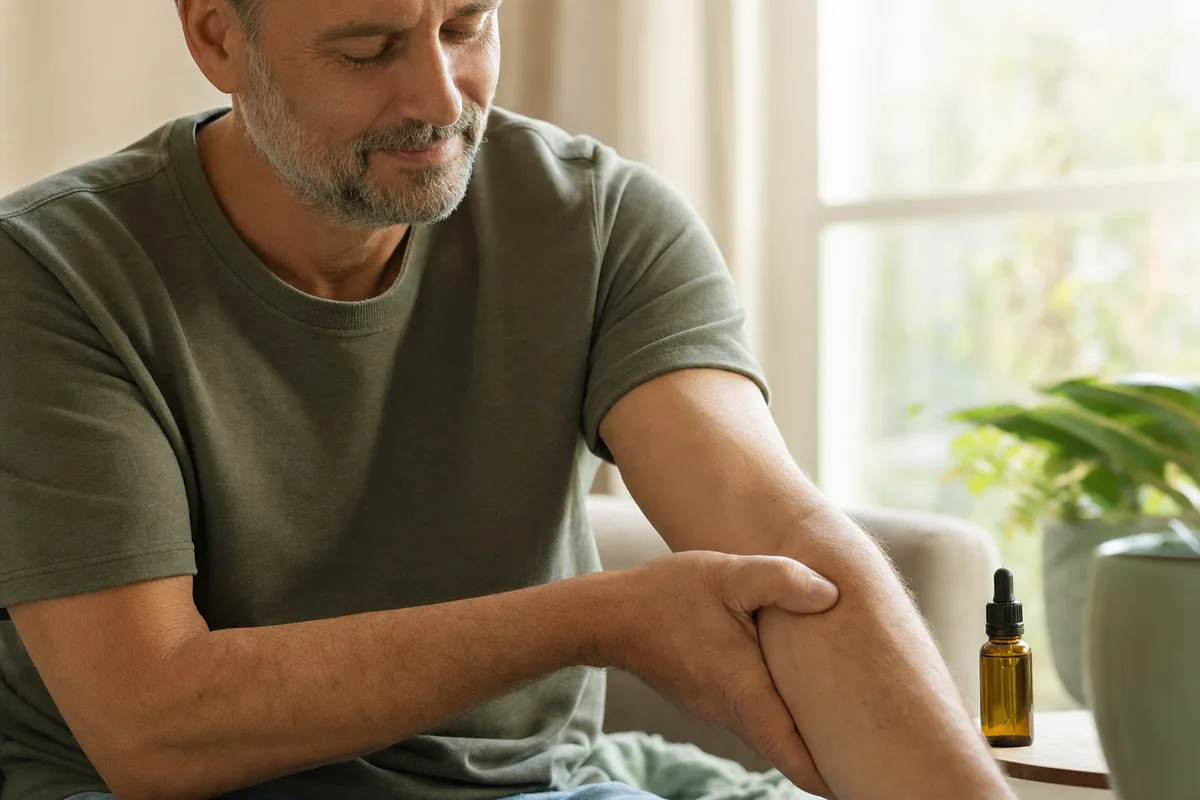
Neuropathic pain is the area with the strongest evidence. Nerve damage - whether from diabetes, injury, chemotherapy or viral ganglion inflammation - produces a burning, shooting pain that NSAIDs are largely ineffective against. For more on one of the most common types: diabetic neuropathy and medical cannabis.
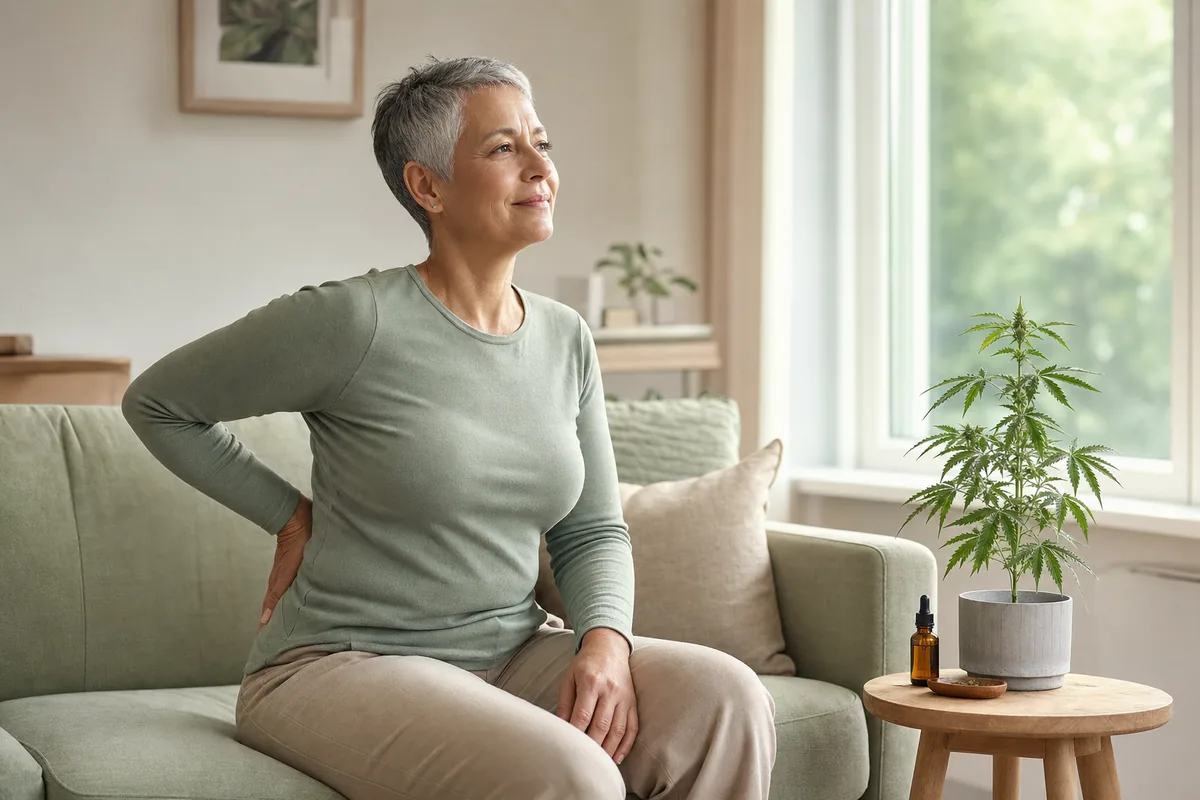
Spinal and back pain - chronic, often involving both muscular and nerve components simultaneously. Sciatica, disc disease, post-surgical back pain. More detail: medical cannabis for back pain and sciatica.
Joint pain - degenerative joint disease, rheumatoid arthritis, psoriatic arthritis. CBD in particular has demonstrated anti-inflammatory properties that may ease swelling and morning stiffness. Full article: cannabis for joint pain and degeneration.
Fibromyalgia - widespread musculoskeletal pain accompanied by sleep disturbance, fatigue and cognitive difficulties. Treatment is especially challenging here because the condition has no single cause. Cannabinoids help some patients through their combined action on pain and sleep. More: medical cannabis for fibromyalgia.
Cancer pain - both the pain of the disease itself and chemotherapy-induced pain (neuropathy). Cannabis is often used here as an adjunctive treatment alongside opioids. Dedicated article: medical cannabis for cancer pain.
Post-traumatic and post-surgical pain that has become chronic, CRPS (complex regional pain syndrome), post-herpetic neuralgia. These are situations where the tissue has healed but the nervous system continues to generate pain signals. CRPS and medical cannabis and post-herpetic pain and neuralgias.
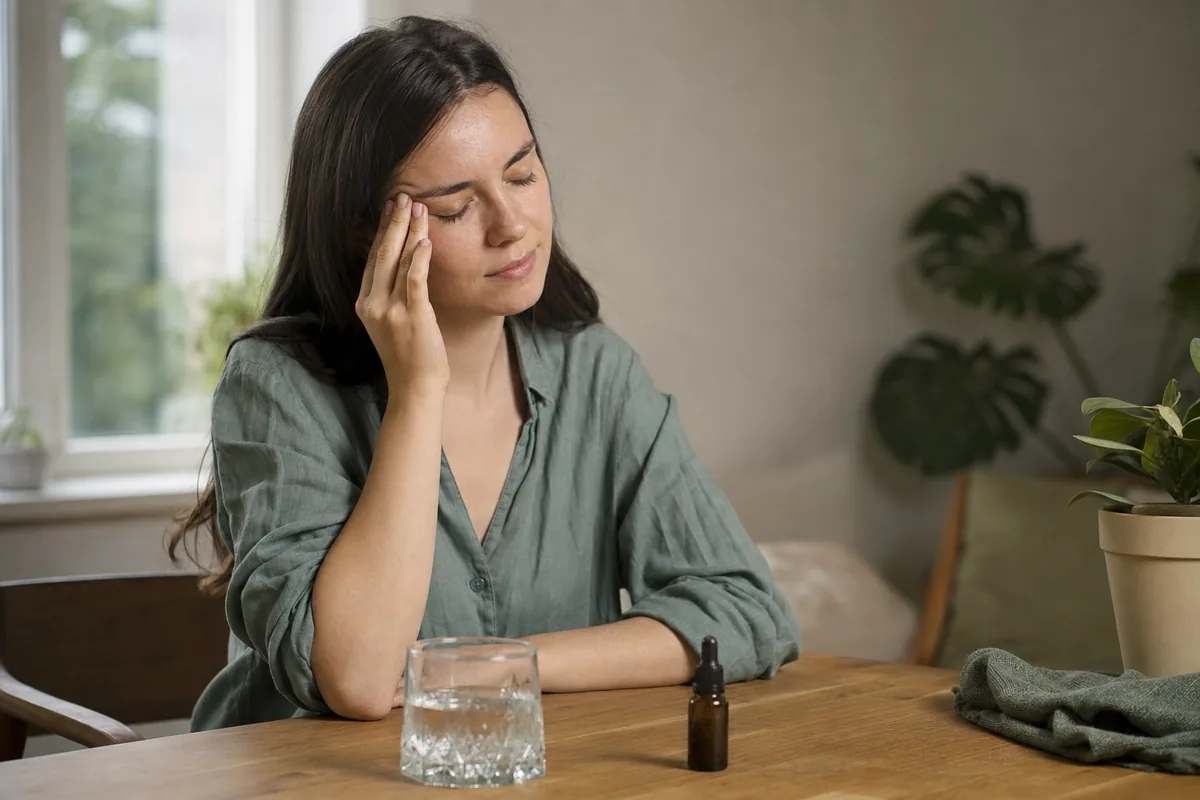
Migraines - some patients report shorter and less severe episodes. The evidence is weaker than for neuropathic pain, but it does exist. More: medical cannabis for migraines.
For acute pain - a fresh injury, toothache, appendicitis - cannabis is not the first choice. This is a tool for pain that persists.
How cannabinoids act on pain - the mechanism
The human body has an endocannabinoid system - a network of receptors distributed throughout the brain, spinal cord, peripheral nervous system and tissues. It regulates, among other things, pain perception, inflammatory responses, mood and sleep. THC and CBD from cannabis act on these receptors, modifying the way the body processes pain signals.
CB1 receptors are concentrated primarily in the central nervous system - in structures responsible for pain modulation: the dorsal horns of the spinal cord, the periaqueductal grey matter and the thalamus. This is the pathway through which THC produces its analgesic and sleep-promoting effects. CB2 receptors are found mainly in peripheral tissues and the immune system - their activation reduces inflammation.
THC (tetrahydrocannabinol) is the primary psychoactive constituent and, at the same time, the main driver of analgesic action. It reduces pain intensity and - equally importantly - changes the emotional relationship with pain: it may be experienced as less unpleasant and more tolerable. THC also promotes sleep, which is particularly valuable when pain disrupts rest.
CBD (cannabidiol) has no psychoactive effect. It has anti-inflammatory properties and can mitigate some of the side effects of THC (such as anxiety). On its own, its direct analgesic action is weaker, but in combination with THC it enhances the therapeutic effect - the so-called entourage effect.
The ratio of THC to CBD in the prescribed preparation is tailored by the doctor to the type of pain and the patient's individual profile. For neuropathic pain with nocturnal flare-ups and sleep problems, a preparation with a higher THC content is often chosen; for inflammatory pain and daytime use, a preparation with a significant CBD presence. More on this: how THC/CBD ratios are selected.
What the research shows - an honest review
There is now a substantial body of research on medical cannabis in pain - and that is valuable, because it allows us to speak concretely rather than speculate. At the same time, it is worth understanding the limitations of that research.
Where the evidence is strongest - neuropathic pain. A systematic review published in the Annals of Internal Medicine (2025), covering 25 randomised clinical trials involving more than 2,300 patients (64% with neuropathic pain), found that cannabinoids with comparable THC/CBD ratios can moderately reduce pain. Preparations with a higher THC-to-CBD ratio produced more pronounced analgesic effects in some patients, but also more side effects. The Cochrane Database has also published a review of cannabinoids in neuropathic pain in adults, confirming some efficacy while noting the limited quality of available data.
What is the actual effect? Studies describe it as "moderate" or "modest" - which does not mean insignificant. For someone who has slept only three to four hours a night for years because of pain, even partial relief translates into a dramatic improvement in quality of life. Honest expectations are essential: not the elimination of pain, but its reduction to a level that allows functioning.
Opioid reduction. A review published in BMJ Open analysed data from randomised trials and observational studies on the so-called opioid-sparing effect. Results from randomised trials were inconclusive. Observational studies suggested that a significant proportion of patients using cannabinoids alongside opioids reduced their opioid doses - but the quality of that data is low and firm conclusions cannot be drawn. More on this topic: medical cannabis and opioids.
Where the evidence is weaker. Fibromyalgia, joint pain, musculoskeletal pain - there is less research here and the results are more varied. This does not mean cannabinoids do not help in these conditions - it means we have less certainty. Some patients report clear improvement; others notice no difference.
An honest summary. Medical cannabis is not a treatment in the category of "definitely going to work". It is a therapeutic option with documented efficacy in some patients with chronic pain - particularly neuropathic pain - when other approaches have failed. It does not treat the cause of pain; it alleviates symptoms.
Forms of administration and dosing
The two main forms are dried flower for vaporisation and oil/drops. The choice depends on the nature of the pain and the patient's lifestyle.
Dried flower and vaporisation - onset within a few minutes, duration two to four hours. Well suited to sudden flare-ups and pain that appears irregularly. Vaporisation (not combustion) minimises respiratory risk. On choosing equipment: which vaporiser to choose.
Oil/drops - slower onset (30-90 minutes), but longer-lasting and more predictable (six to eight hours). Often chosen for nocturnal pain and by patients who prefer not to inhale. Easier to dose precisely.
Capsules - similar action profile to oil, convenient when travelling or following a regular schedule. Full comparison: forms of medical cannabis administration.
Start low, go slow - this is the principle your doctor will follow, and you should too. Treatment begins at the minimum dose, which is increased gradually until the therapeutic effect is achieved without excessive side effects. The goal is the lowest dose that genuinely relieves pain - not the maximum. Full guide: dosing medical cannabis.
Dosing is highly individual. Two people with similar pain may need very different doses, due to differences in metabolism, body weight and the sensitivity of the endocannabinoid system.
Medical cannabis and opioid reduction
Patients on long-term opioid therapy (tramadol, oxycodone, morphine) often ask about the possibility of reducing their dose while using cannabis at the same time. This is a legitimate question - opioids used over the long term lead to tolerance, physical dependence and a range of side effects.
Observational data suggest that some patients using cannabinoids alongside opioids do reduce their opioid doses over time. However, this should be approached with caution: it is not a guaranteed effect and does not apply to everyone. Randomised clinical trials have not confirmed this conclusively.
Important: reducing opioid doses should NEVER be done independently. Discontinuing or rapidly reducing opioids can be dangerous. If you are considering this path, a cannabis physician will discuss it with you during your consultation and plan any dose reduction gradually, in agreement with your treating doctor.
More on this topic: medical cannabis and opioid medications.
Safety and contraindications
Medical cannabis is relatively safe when dosed correctly - but it is not without risk and is not suitable for everyone.
Absolute contraindications:
Requiring careful management:
Side effects that may occur with too high a THC dose: dry mouth, dizziness, drowsiness, rapid heart rate, anxiety or disorientation. This is why the start low, go slow principle is so important - it allows you to find the therapeutic window before uncomfortable effects arise.
Addiction risk? Medical cannabis used under medical supervision, according to a prescribed regimen, carries a low risk of dependence. The risk increases with unsupervised, uncontrolled high-dose use. CBD on its own is not addictive.
Driving and occupational activity
This needs to be stated clearly: medications containing THC rule out driving. Polish law treats THC in the blood in much the same way as alcohol - a driver with active THC in their blood commits an offence, regardless of holding a valid prescription.
If you drive for work or operate machinery, discuss this with your doctor during the consultation. A possible solution is evening-only dosing (by morning, THC levels are significantly lower or undetectable), or a CBD-dominant preparation with trace THC.
THC elimination time is individual and depends on dose, frequency of use and metabolism. There is no single safe rule of "after X hours I can drive".
When medical cannabis makes sense - and when it does not
Medical cannabis is generally considered when standard treatment has failed or its side effects are harder to tolerate than the pain itself.
It makes sense when:
It will not replace:
Honestly: for some patients, the treatment does not bring the expected relief or the effect is weaker than anticipated. The doctor assesses this at the first follow-up and does not continue treatment if there is no benefit.
How to start pain treatment with cannabis
The process begins with an initial consultation (169 PLN, approximately 20-30 minutes). The doctor discusses your pain history, previous treatments and medical records - it is worth bringing test results and a list of your current medications.
If you qualify for treatment, the doctor issues an e-prescription during the appointment. You will also receive detailed instructions on use and dosing.
Follow-up appointments (149 PLN) take place every few weeks at the start of treatment. These are opportunities to assess the results, adjust the dose and - if necessary - change the preparation.
More about the prescription process: how to obtain a medical cannabis prescription. Full cost of treatment (consultation plus medication): how much does medical cannabis therapy cost in 2026.
We see patients in person in Krakow (Dr Olha Kompaniiets, internist with 25 years of experience), Bydgoszcz and Torun (Dr Uladzislau Shelest) and Kielce. Prescriptions are issued exclusively following an in-person medical examination - remote prescribing is not possible.
Frequently asked questions
Is medical cannabis addictive?
The risk of dependence when used according to medical guidance is low - significantly lower than with long-term opioid use. CBD on its own is not addictive. Regular THC use can lead to psychological dependence in some individuals, which is why treatment takes place under medical supervision.
Will I be high all day?
No - this is one of the most common misconceptions. With a correctly calibrated dose, the aim is pain relief without a pronounced psychoactive effect. Start low, go slow allows you to find the therapeutic dose. Many patients use oil in the evenings and function normally during the day.
Will medical cannabis replace my existing pain medications?
Usually not - it complements them. It is often used alongside existing treatment. Any reduction or discontinuation of other medications should always be done under medical supervision.
How much does treatment cost?
Initial consultation: 169 PLN. Follow-up appointment: 149 PLN. The cost of the medication (flower or oil) depends on dose and producer - details in the article on treatment costs. Medical cannabis is not reimbursed by the national health fund (NFZ).
Can I drive during treatment?
No, if you are using preparations containing THC. THC is detectable in the blood for several to over ten hours after use, and Polish law makes no exception for patients using it medicinally. Discuss your dosing schedule with your doctor - evening use gives more flexibility during the day.
How quickly will I feel the effect?
With vaporisation - within a few minutes. With oil - 30 to 90 minutes. The full therapeutic effect, meaning stable pain relief, builds over several weeks of gradual dose adjustment. Many patients notice the first effects after a few days of regular use - primarily as improved sleep.
Ready to start therapy?
Book online in 60 seconds - consultation at our clinic in Krakow, Bydgoszcz, Toruń or Kielce.
Book a consultation