Medical cannabis for drug-resistant epilepsy - CBD and Epidiolex
Drug-resistant epilepsy is one of the few areas where medical cannabis - or more precisely, CBD - has the strongest scientific evidence of any indication. The drug based on purified cannabidiol (Epidiolex/Epidyolex) has completed randomised clinical trials and received approval from both the FDA (USA) and EMA (European Union). This is not an experiment - it is documented therapy.
At the same time, this field is full of misconceptions. CBD helps in specific, severe forms of drug-resistant epilepsy - not in every type of epilepsy. And it is a neurologist or epileptologist - not a general practitioner - who manages such treatment. Below we explain what is actually known, how CBD works in the brain, and what you should not attempt on your own.
Drug-resistant epilepsy - when CBD enters the picture
Drug-resistant epilepsy (refractory epilepsy) is a condition in which seizures do not stop despite at least two appropriately chosen antiepileptic drugs. It affects approximately 30% of people with epilepsy - a large population for whom standard treatment is simply not enough.
Within this group, rare epileptic syndromes with early onset are particularly difficult to control. These are exactly the conditions for which the strongest data on CBD have been gathered:
If epilepsy does not belong to the categories listed above and is well controlled with medication, there is no scientific basis for adding CBD as a supportive therapy.
The role of CBD - why not THC
In epilepsy, CBD (cannabidiol) is the key compound - not THC (tetrahydrocannabinol). This is a fundamental distinction that is largely invisible in popular narratives about "medical cannabis".
THC acts through CB1 receptors in the nervous system and can - depending on dose and context - lower the seizure threshold, paradoxically making seizures more likely to occur. For this reason, THC in epilepsy is used with great caution, and THC-dominant preparations (typical dried medical cannabis) are not a first-, second-, or third-line treatment.
CBD works in a completely different way - through different mechanisms:
These mechanisms differ from those of classical antiepileptic drugs, which means CBD may act additively with some of them. At the same time - importantly - CBD does not engage the endocannabinoid system through CB1 receptors to the same extent as THC, resulting in a different side-effect profile.
Important: CBD available in pharmacies (supplements, OTC drops) is an entirely different quality and dosage than Epidiolex. Do not treat it as a substitute for the medication.
What clinical trials show - strong evidence
Epidiolex (purified CBD in oral solution, 100 mg/ml) has undergone several large randomised, double-blind trials - the gold standard of medical evidence:
These trials led to FDA approval in 2018 and EMA/European Commission approval (as Epidyolex) - for Dravet syndrome, Lennox-Gastaut syndrome, and subsequently tuberous sclerosis complex. This was the first registration of a cannabis-based medicine in the history of European and American pharmaceutical law.
The data confirm that in a significant proportion of patients with these conditions, CBD reduces seizure frequency. This does not mean, however, that seizures stop completely in all patients - individual responses vary, and some patients do not respond to the therapy.
For broader context on how cannabinoid ratios are matched to specific conditions, see the article on THC and CBD ratios.
Pharmaceutical CBD vs. pharmacy products - a key difference
Epidiolex is pharmaceutical-grade purified CBD - standardised in concentration, free from THC, and tested for pharmacokinetics. Dosing is precise (mg/kg body weight), and every batch is identical.
CBD products available over the counter in Polish pharmacies (dietary supplements, 5-10% CBD oils) belong to a completely different category:
This does not mean CBD supplements are useless - but in drug-resistant epilepsy they are not equivalent to a registered medication. Patients who want to explore CBD in the context of epilepsy need the right preparation, the right dose, and above all, the right doctor.
Dried cannabis flower (medical cannabis in vaporisable form) has very limited application in epilepsy. It contains THC, has variable CBD concentrations, and the risk of destabilising neurological status is too high to use without supervision.
Drug interactions - what must not be overlooked
CBD is a potent inhibitor of cytochrome P450 enzymes, particularly CYP2C19 and CYP3A4. This means it slows the metabolism of many drugs - including antiepileptic drugs.
The most clinically important interaction involves clobazam - a benzodiazepine commonly used in drug-resistant epilepsy. CBD significantly raises the level of the active clobazam metabolite (N-desmethylclobazam), which can enhance therapeutic effects but also increase the risk of sedation and adverse events. In Epidiolex trials, some patients required a reduction in their clobazam dose.
Valproate (valproic acid) - concurrent use with CBD has been associated with elevated liver enzyme activity (transaminases), requiring monitoring of liver function.
Other antiepileptic drugs (lamotrigine, topiramate, levetiracetam) may show altered plasma concentrations when taken alongside CBD. Every introduction of CBD into a treatment regimen requires:
This is one of the main reasons why drug-resistant epilepsy belongs in the hands of a specialist - it is not an area for self-experimentation.
Dosing and treatment management
In clinical trials with Epidiolex, CBD doses of 2-25 mg/kg body weight per day were used, divided into two doses. Dosing typically starts at the minimum and is gradually increased - titration may take several weeks.
In Poland, Epidiolex is registered but its availability and reimbursement are limited. Patients with qualifying diagnoses (DS, LGS, TSC) may access therapy through specialised epileptology centres.
In the context of prescription medical cannabis in Poland, a doctor - following consultation with a neurologist - may prescribe a CBD-dominant cannabis preparation as a supportive therapy in drug-resistant epilepsy. This is not the same as Epidiolex, but some patients report a beneficial effect on their clinical condition.
The details of obtaining a prescription are explained in a separate article: how to obtain a medical cannabis prescription. For available preparation forms - dried flower, oils, capsules - see the article on medical cannabis delivery forms.
Safety - what may occur
CBD at therapeutic doses is generally well tolerated, but it is not without side effects. In Epidiolex trials, the most commonly reported were:
Serious adverse effects (hepatotoxicity) are rare but possible - hence the requirement to monitor liver function.
CBD does not cause physical dependence and does not produce euphoria. It has no psychoactive effect in the sense of THC. It does not impair the ability to drive to the same extent as classical antiepileptic drugs from the benzodiazepine class - although drowsiness as a side effect requires attention.
Important: abrupt discontinuation of CBD may - as with other drugs that modulate neuronal activity - worsen seizures. Tapering should be gradual, under medical supervision.
What CBD cannot replace
CBD, even in the form of pharmaceutical Epidiolex, is an adjunctive treatment - always used in combination with antiepileptic drugs, not instead of them. You should not:
Drug-resistant epilepsy is a serious neurological disease whose treatment requires precise diagnosis of the epileptic syndrome, drug selection, and regular specialist supervision. CBD can be a valuable piece of the puzzle - but only in collaboration between a neurologist and the doctor managing the cannabis therapy.
Related neurological topics - spasticity and multiple sclerosis - are covered in the articles on medical cannabis in MS and spasticity after stroke.
How to get started - practical steps
If you or a loved one is living with drug-resistant epilepsy and considering adding CBD to the treatment regimen:
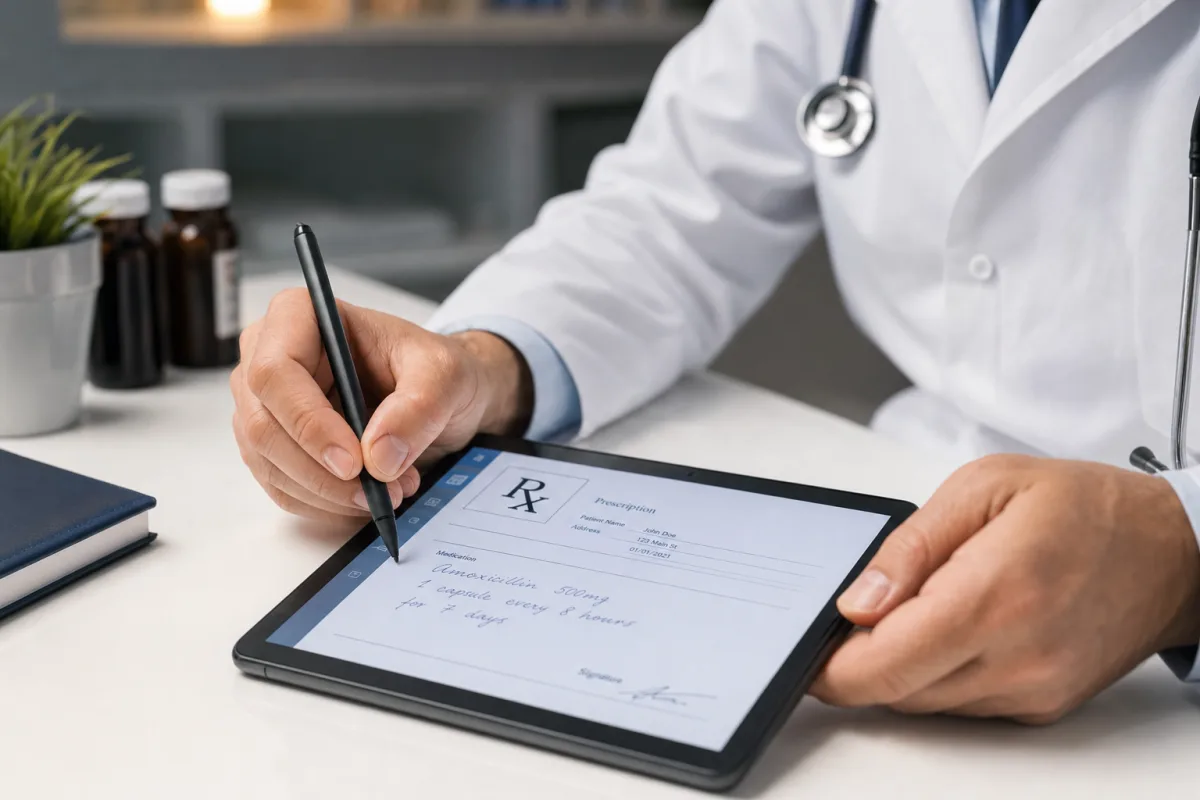
1. Consult the treating neurologist - before any change to the treatment plan. The neurologist will assess whether the epilepsy profile qualifies for CBD therapy and how to plan titration. 2. Book a qualifying appointment with a medical cannabis doctor - at the appointment you will discuss your medical history, current medications, and therapeutic goal. The doctor may issue a prescription for a cannabis preparation or refer you to the appropriate specialist. 3. Plan monitoring - liver function tests, possible drug plasma level checks, a seizure diary (frequency, duration, type). 4. Be patient - CBD titration takes weeks; effects may appear after several months. 5. Do not change medications independently - any adjustment to antiepileptic drug doses during CBD therapy requires medical supervision.
A qualifying appointment (169 PLN) with the option to receive an e-prescription during the visit is available in person in Krakow, Bydgoszcz, Torun, or Kielce. Call: 731 000 645 or use the form on the website. More on treatment costs: medical cannabis pricing 2026. Dosing of preparations is described in a separate guide: medical cannabis dosing.
FAQ - frequently asked questions
Will CBD cure epilepsy? No - CBD is a symptomatic treatment that reduces the frequency and/or severity of seizures in some patients. It does not remove the cause of epilepsy and is not a curative therapy.
Can every epilepsy patient take CBD? No. The strongest evidence applies to Dravet syndrome, Lennox-Gastaut syndrome, and tuberous sclerosis complex. In other types of epilepsy, the use of CBD requires individual neurological assessment, and the evidence base is weaker.
Can Epidiolex be purchased at a Polish pharmacy? Epidiolex/Epidyolex is registered in Poland, but availability is limited - the drug is used mainly in specialised epileptology centres. Prescription cannabis preparations (dried flower, oils) are more widely available in pharmacies and may be an alternative option after consultation with a doctor.
Does dried medical cannabis with THC help in epilepsy? THC can lower the seizure threshold - for this reason it is used cautiously in epilepsy and is generally not a first choice. If used, it is given in low doses under strict supervision, and the preparation should be CBD-dominant.
Does CBD interact with my epilepsy medications? Yes - the most significant interaction is with clobazam (raises the metabolite level) and valproates (risk of elevated transaminases). Before starting CBD, a specialist must review all current medications for interactions.
What is the role of the medical cannabis doctor versus the neurologist? The neurologist manages epilepsy treatment - it is the neurologist who decides on the antiepileptic drug regimen. The medical cannabis doctor may issue a prescription for a cannabis preparation as a complementary element, but both specialties must work together. Do not bypass the neurologist. General information on differences in how cannabinoids work can be found in the article on medical cannabis in Parkinson's disease - a condition where mechanisms partially overlap.
Ready to start therapy?
Book online in 60 seconds - consultation at our clinic in Krakow, Bydgoszcz, Toruń or Kielce.
Book a consultation